How colour analysis helped me rediscover my post partum identity
Like a lot of women, I had a bit of an identity crisis after having a baby.
Suddenly my body looked and felt different, and my clothes didn’t fit or work the way I needed them to.
Between needing different sets of clothes for the bump, post partum and breastfeeding, and home, the office and exercise, I had way too many clothes often in quite dull and frumpy styles.
I didn’t have the headspace or time to dig through them in the mornings to find something that made me feel like me, or go shopping for myself to replace them.I came across colour analysis online, and after reading a lot about it (while doom scrolling during night nursing) I thought it might help me get through the overwhelm of my wardrobe.
What is colour analysis?
At its most basic, everyone is either cool or warm toned, and high or low contrast (or somewhere in the middle). That means most people fall into one of four ‘seasons’:
🌷 Spring – warm and low contrast
☀️ Summer – cool and low contrast
🍁 Autumn – warm and high contrast
❄️ Winter – cool and high contrast
How do I find out my season?
While there’s a lot of info online that helps you guess your own season, not all of it is accurate, so although I had an inkling I thought I’d get analysed by someone objective.
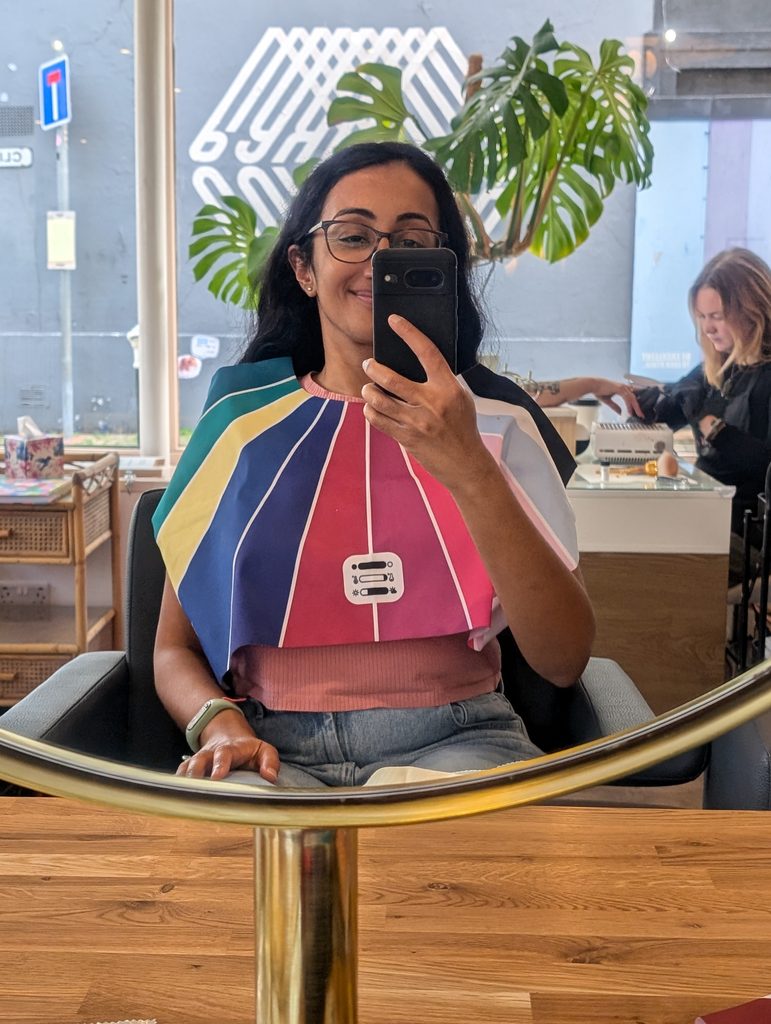
First, I booked an appointment with an in-person stylist because a lot of the chatter online was that having someone analyse you in real life in daylight is the most accurate.
They ‘drape’ you with different colours to see what does and doesn’t work.
The stylist was lovely but she didn’t tell me anything I didn’t already know – I suspected I was a winter, and she confirmed that.
She sent me some follow-up information, which was mostly screenshots from other stylists’ Instagram accounts, which seemed a bit cheeky!
On reflection I should have checked in advance what system she used and the level of detailed information she would give.
Recommended services
Later I found Style Me Happy which offers digital colour analysis online, using photos you send in. Emily, who runs the business, came across as really down to earth, affordable, and transparent about what you get.
I booked an analysis with her, and it was brilliant! You get a individual document tailored to you, and importantly with your ‘sub season’.
I have also heard many good things from friends about Alex Eno based in Petersfield, for a truly personalised experience.
My colours
It turns out I am a Bright Winter! That means although I’m cool toned, brightness is my strongest feature, and I can get away with some warm bright colours too.
If you’re also a Bright Winter, here are some good quality brands that often have items in colours that suit us:
Cos, Lucy & Yak, Boden, Oliver Bonas, Next, Jigsaw, Whistles, United Colors of Benneton, Hush, Joanie, Uniqlo, Mint Velvet and of course vintage items.
Using your colour analysis
It can feel jarring or overwhelming when you get your palette recommendations, look at your wardrobe and feel like you don’t know where to start.
Remember:
Your palette is a guide, not a law. It should be fun trialling new colours to express yourself. Wear whatever makes you feel good.
Here are my top tips for your next steps…
1 Initial clear out
Grab a bin bag and fill it up with every that doesn’t make you feel good, including things that:
- you used to wear years ago
- wore once but never again
- don’t fit your body or lifestyle any more
- wished work for you but don’t
- in your ‘worst’ colours
For me, I said goodbye to all the beiges and khakis, which always made me look a little ill. Take it to the charity shop or post on Vinted, and feel the weight lifted off your shoulders.
2 Start small
Look at your neutrals
Do you have a few staples in those colours that can go with most things? For me it’s colours like white, black, and navy.
One perk of having your colours done is that you can buy items with confidence that they’ll suit you for a long time – so you can spend more on fewer, higher quality items. I’ve found I’m trading out four ‘ok’ cheap jumpers for one nice merino wool jumper in a great colour via Vinted.
Which colours in your palette are you most drawn to?

For me the colour that stood out was cobalt blue, which years ago a friend described as ‘Lianne’s colour’.
Looking at it now, it makes a lot of sense – it’s cool toned and bright/high contrast, which is perfect for me.
I looked for other items in colours I liked that sit near my face, where they make the most impact, like:
- Tops/t-shirts
- Dresses
- Jewellery
- Scarves
- Hats
- Makeup, like lipstick
You quickly start to see how the right colours work well for you.
Elevate with accessories
As Emily at Style My Happy always says, an easy way to make an outfit look more intentional is to add a couple of accessories. Starting adding an extra necklace or belt in a splash of your colours.
3 Try some new colours
There are probably some colours you just never go for, because they ‘never work’.
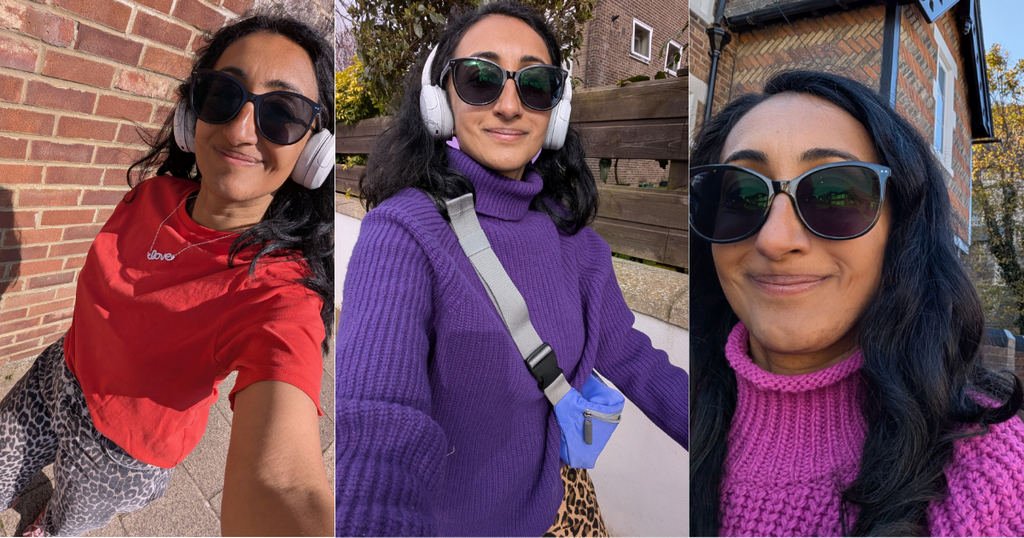
For me I couldn’t find any pink or green things that suited, so I just assumed they weren’t ever for me. Turns out I was picking the wrong colours!
I need fuchsia pink and jade or emerald green, not baby pink or khaki.
4 Mix and match
Now the fun starts – your palette colours should all complement each other. So rather than just picking one accent colour among neutrals in an outfit, why not combine two or more colours? Pinterest is a great resource for inspiration – just search ‘[season] colour combinations’.
My favourites from my palette include:
- Burgundy and fuchsia
- Red and fuchsia
- Cobalt and emerald
5 Plan your outfits
Once your wardrobe works together, you can start getting creative and more organised.
I started using an app Indyx, though others like Whering are available) to digitise my wardrobe and plan and save outfits for work and days out.
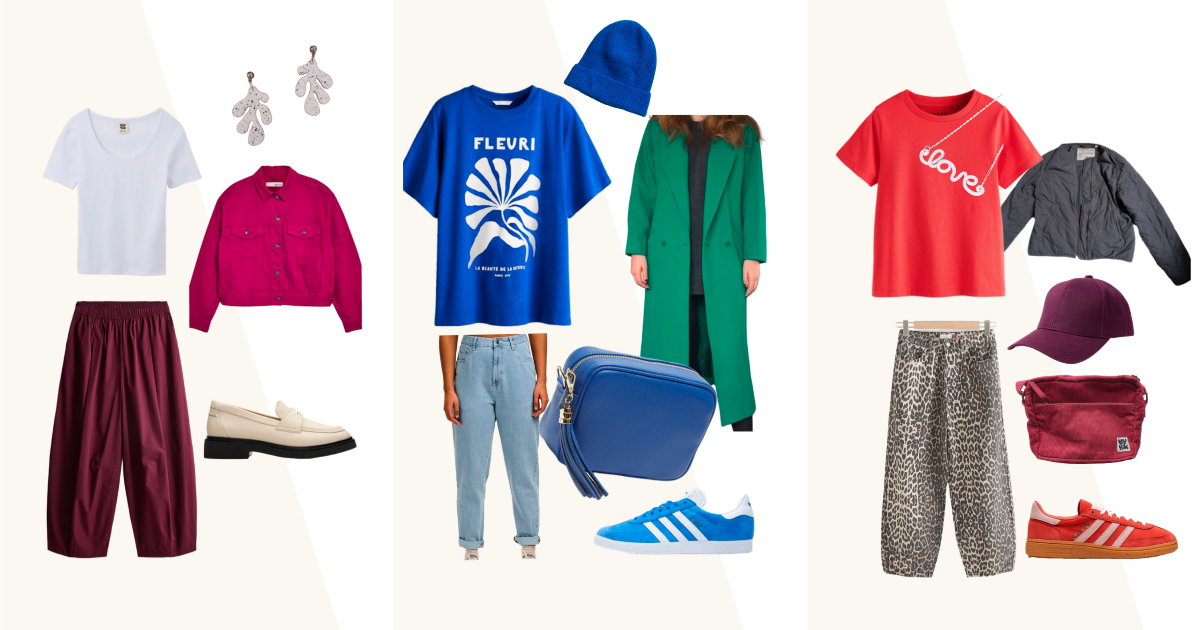
This sounds like overkill, and something I never thought I’d be doing. I don’t bother on days I’m just lounging at him in gym clothes.
But it’s working really well for me for a few reasons:
Getting more selective about purchases
At a glance I can see what I already own, and the gaps in my wardrobe. No need to buy another white blouse, because I already have one. But I could do with a pair of brown trousers for work.
Also, if you’re thinking about buying something new, you can load them into the app, and add them to flatlays to see how they fit with your wardrobe. This helped me pick the colour of my pair of new Merry People welly boots!
Making mornings easier
Being able to save outfits means you can separate out the picking of an outfit and the putting on of the outfit.
Rather than digging through my wardrobe in a panic in the morning, trying to find something to wear, the day before I can scroll through tried and tested outfits, and get them out for the morning. What used to be a 20 min stressful process becomes a 2 min one.
You can plan outfits in advance – what you’re wearing to a friends’ birthday BBQ, while you’re on your lunch break, waiting for a train, or doomscrolling in the evenings.
Getting rid of things that don’t get worn
When you record what you’ve worn, you can quickly see which items you keep coming back to, and which never get worn. So you can cull your unused clothes even more!
Finding yourself
If you’re having an identity crisis, finding new ways to express yourself through your wardrobe can be very creative. But not all of us have the time, energy or money to waste on bumbling through buying ‘the wrong’ things.
So think of colour analysis as a way to make your decision-making so much easier and less stressful. It honestly makes shopping SO much easier as I just skip over the the 80% of things that don’t suit – I liken it to being vegetarian, and just focussing on the 3-4 options on the menu that I eat.
And most of all, remember to have fun!